What to Look for in a First HT
For most new Technicians, a first radio needs to cover 2 meters (144–148 MHz) and ideally 70 centimeters (420–450 MHz) — the two most active VHF/UHF bands. Beyond that, you want reliable audio, a readable display, and basic ease of programming. Everything else is secondary until you know what you actually use.
The Baofeng UV-5R — Under $30
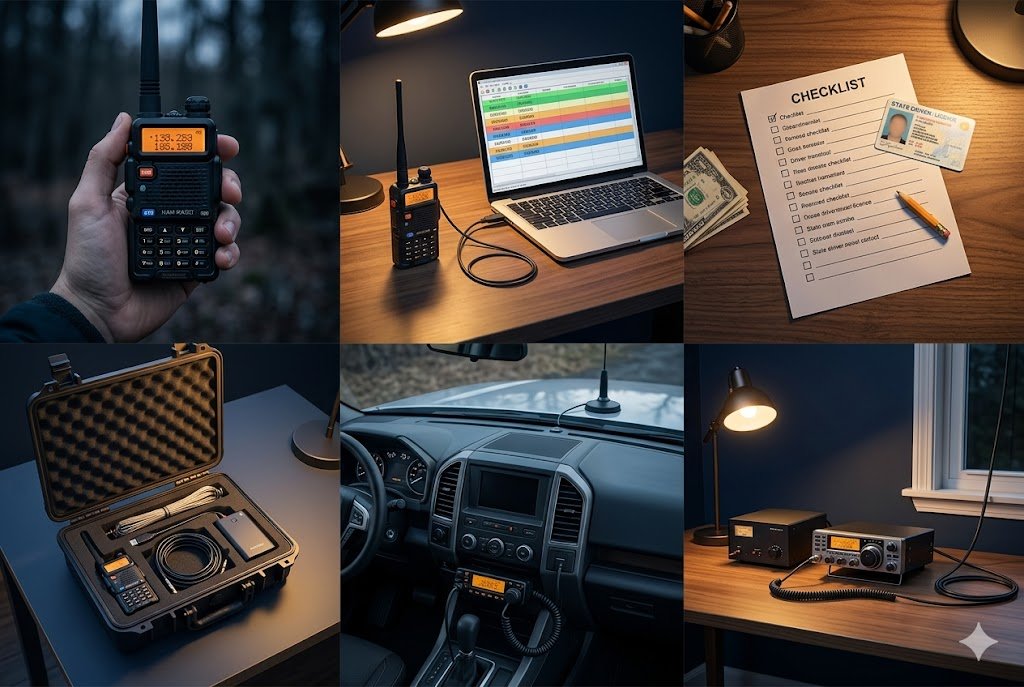
The UV-5R is the most widely purchased beginner HT in the world. It covers both 2 meters and 70cm, offers 4–5 watts of output power, and costs less than a restaurant meal. Millions of hams started with one. Its weaknesses are real — the build quality is utilitarian, the out-of-box programming is confusing without CHIRP software, and the battery life is modest — but none of these prevent it from working well as a first radio.
Best for: Trying ham radio without a big upfront investment. If you decide the hobby isn't for you, losing $30 is not painful. If you stick with it, you'll likely upgrade in a year anyway.
The Yaesu FT-65R — Around $80
The FT-65R is a significant step up in build quality from the Baofeng. It feels more solid, has better receiver sensitivity (less interference from nearby strong signals), and has a simpler menu system that most users find friendlier. Yaesu is a respected Japanese radio manufacturer with decades in amateur radio. The FT-65R is an excellent first radio if you're willing to spend a bit more for a better experience.
Best for: Someone who expects to stay in the hobby and wants a radio they won't immediately want to replace. The better receiver performance matters in dense metro areas with many signals.
The Baofeng UV-82 — Around $35
The UV-82 is essentially a UV-5R with a bigger battery, a physical PTT button design some people prefer, and slightly better audio. If you want more than a UV-5R but are price-sensitive, the UV-82 is a reasonable middle ground. Programming with CHIRP is identical to the UV-5R.
The BF-F8HP (BaoFeng 8-Watt) — Around $60
The higher-power version of the Baofeng line, offering 8 watts versus the UV-5R's 5. More power is only useful when you're at the edge of a repeater's coverage area — in most cases, 5 watts is plenty. Worth considering if you know you'll be operating in remote areas or trying to hit distant repeaters.
| Radio | Price | Power | Build Quality | Best For |
|---|---|---|---|---|
| Baofeng UV-5R | ~$28 | 5W | Basic | Trying the hobby, minimum cost |
| Baofeng UV-82 | ~$35 | 5–8W | Basic | Slightly better UV-5R |
| BF-F8HP | ~$60 | 8W | Basic | More range on a budget |
| Yaesu FT-65R | ~$154 | 5W | Good | Better experience, staying in hobby |
Start with a Baofeng UV-5R or UV-82 if you're not sure this hobby is for you. Start with a Yaesu FT-65R if you're already committed. Either works on any local repeater.
Do You Need a Programming Cable?
For Baofeng radios, yes — strongly recommended. Manual keypad programming of repeater frequencies is tedious and error-prone. A $10–$15 programming cable and CHIRP software makes the process straightforward. See our full CHIRP programming guide.
Yaesu FT-65R Dual-Band HT
The most recommended entry-level handheld for new Technician operators who want Japanese build quality over budget pricing. IPX5 weather resistance, clean audio, and a simpler menu than the Baofeng — at $153.89 with a 3-year manufacturer warranty — more than the Baofeng, but you are buying a radio that lasts.
View on Amazon →As an Amazon Associate, we earn from qualifying purchases. This does not affect the price you pay.
Yaesu FT-65R Dual-Band HT
The most recommended entry-level handheld for new Technician operators who want Japanese build quality over budget pricing. IPX5 weather resistance, clean audio, and a simpler menu than the Baofeng — at $153.89 with a 3-year manufacturer warranty — more than the Baofeng, but you are buying a radio that lasts.
View on Amazon →As an Amazon Associate, we earn from qualifying purchases. This does not affect the price you pay.
- Do I need a license to buy a ham radio?No license is required to purchase an amateur radio. You need a license to transmit on amateur frequencies. You can buy a radio and listen (monitor) without a license — and practicing transmitting with the radio turned off (known as "armchair copyring") is a great way to prepare for your first actual contact.
- Is the Baofeng legal to use on amateur frequencies?Yes. Baofeng radios like the UV-5R are legal to use on amateur radio frequencies by licensed operators. The FCC does not certify ham radios the same way it certifies consumer radios — amateur operators are allowed to modify and use non-certified radios on amateur bands. The Baofeng is widely used by licensed hams without any legal issues.
- Can I use a ham radio on FRS/GMRS family radio frequencies?No. FRS and GMRS are separate radio services with their own FCC rules. Using a non-certified radio (like a Baofeng) on FRS or GMRS frequencies is a federal violation, even if the radio can physically transmit there. Use amateur radios on amateur frequencies only.
- Should I buy a used radio?Used radios from reputable sellers on QRZ.com's classifieds or RadioReference's forums can be excellent value. For Baofeng/budget radios, the price difference between new and used is small — buy new. For Yaesu, Icom, or Kenwood radios, a used radio in good condition can offer significant savings.
Affiliate Disclosure: Ham Radio License participates in the Amazon Associates program. Links marked with "View on Amazon" are affiliate links — we may earn a small commission at no additional cost to you. This does not influence our recommendations. We only recommend products we would genuinely suggest to a new ham based on real-world performance and value.
Affiliate Disclosure: Ham Radio License participates in the Amazon Associates program. Links marked with "View on Amazon" are affiliate links — we may earn a small commission at no additional cost to you. This does not influence our recommendations. We only recommend products we would genuinely suggest to a new ham based on real-world performance and value.
Informational only. Verify current rules and fees at fcc.gov and arrl.org. Ham Radio License is not affiliated with the FCC, ARRL, or any VEC.